Kathryn Nelson
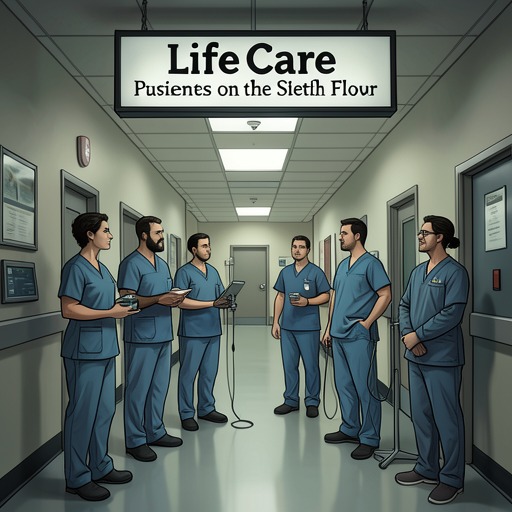
Five Days at MemorialKathryn Nelson, the daughter and longtime caregiver of Elaine Nelson, was among the family members caught inside LifeCare during Hurricane Katrina. She tried repeatedly to stay beside her mother as patients and relatives were moved through the hospital, and she later helped investigators understand what had happened on the seventh floor. Her account links the intimate work of caregiving to the larger controversy over evacuation priorities and medication: Elaine’s condition was discussed by professionals, but Kathryn’s knowledge of her mother and her wishes was not sought before her death.
Caregiver and Daughter
Kathryn had been with Elaine every day during more than a month and a half of hospitalization. Trained as a registered nurse, she understood intensive-care patients’ needs and believed that even patients in comas might hear and remember what was said around them. Her knowledge of nursing therefore shaped her care not as a detached observer but as a daughter who had remained closely involved in her mother’s hospital stay.
Her attachment was visible in small, telling details. She kept a list of people who had been especially kind to her mother, and LifeCare nurse executive Therese Mendez appeared on it twice. When Mendez urged Kathryn to leave before the boats were gone, Kathryn resisted, insisting she could not leave her mother. She even claimed she had cancer, then later wondered how she had said something so untrue. The claim reflected the desperation of someone prepared to say whatever might protect her chance to stay beside Elaine.
Kathryn had previously asked whether she could be admitted as a patient so she and her mother could evacuate together. She wore hospital gowns during Elaine’s stay, and after being sent downstairs she did not remain away for long. On Wednesday, she watched helicopters taking people from the helipad and concluded that the able-bodied were leaving before the sick. When she tried to return to Elaine with her belongings, staff and men acting as guards stopped her and called her a security risk. A woman who had just learned that her own children had survived intervened and allowed Kathryn to go upstairs and spend time with her mother.
Staying at Elaine’s Bedside
Kathryn found Elaine in a room nearer the nursing station, where a nurse was fanning her and using a makeshift suction device to clear secretions. Elaine appeared to be breathing with difficulty; her temperature was 106 degrees and her chest was congested. Kathryn asked for medication to ease her mother’s breathing. The nurse agreed that Elaine needed comfort and gave her a small dose of morphine and Ativan under orders left earlier by an infectious-diseases doctor for patients who might need them.
The nurse also warned Kathryn that the drugs could sometimes cause patients like Elaine to stop breathing. Alarmed, Kathryn stayed awake beside her mother through the night. By morning, Elaine’s fever had broken; she felt cooler, looked better, and had her eyes open. The nurse no longer heard congestion in her lungs. Kathryn remained worried, but the helicopters arriving at the helipad gave her hope that the rescue was continuing.
When Mendez returned with someone who might have been a security guard or police officer, Kathryn was allowed a few minutes to say goodbye. She told Elaine that she was the best mother a daughter could have and that she was proud to be her daughter. She kissed her mother, prayed over her, and left LifeCare with Mendez at about 11:15 a.m. on Thursday, September 1. The farewell was especially painful because Kathryn believed Elaine might hear and remember her words, even if she could not respond.
Evacuation, Loss, and Its Aftermath
Kathryn waited downstairs as long as she could before boarding a boat. During the journey to dry ground, a young woman behind her told her that Elaine had died. After her brother picked her up, Kathryn walked through chest-high, polluted water to her home to rescue her cats. With no dry place inside the flooded house, she and one cat spent the night on top of her car. She later ended up in a Shreveport hospital with depression and suicidal thoughts.
The family learned of Elaine’s death through a difficult search. By the time investigators interviewed Kathryn by speakerphone on October 3, her family had only recently located Elaine’s body at a temporary morgue in St. Gabriel, Louisiana. A volunteer coroner told Kathryn that an autopsy had been performed because euthanasia was suspected. For Kathryn, this raised a question beyond the medical circumstances of her mother’s death: the people who knew Elaine best had not been asked what she wanted or whether she was suffering.
Kathryn rejected euthanasia on religious grounds, even while acknowledging that her mother had been close to death. She believed Elaine would have wanted the truth to emerge. She described her mother as strong and committed to doing right, recalling that Elaine placed a dollar in each purse she donated so that whoever received it would have something extra. Kathryn offered to write down what she remembered from the storm through her departure from the seventh floor and to provide it to investigators. Her willingness to do so made her experience part of the effort to reconstruct the care and decisions surrounding the LifeCare patients.
Witness and Moral Judgment
Kathryn was one of the daughters who had remained with her mother on the LifeCare floor until September 1 and was later identified as an essential family witness. She could describe Elaine’s condition and the care she received shortly before her death, details that investigators feared the grand jury might not hear if LifeCare witnesses were not called. Her testimony mattered not because she claimed medical authority over the case, but because she had been present, knew her mother, and had been excluded from the decisions that determined when she had to leave.
The grand jury did not call Kathryn to testify. She did not say that her chief wish was to see Anna Pou imprisoned; instead, she believed Pou should not keep her medical license, and she questioned what would prevent the nurses from making the same kind of decision again. She understood the issue through a comparison with American troops in wartime: the country did not leave its dead service members behind, she thought, yet at home some patients had been killed and left behind in a failed war against nature. Her brother Craig pursued a civil case.
Kathryn’s story preserves a distinction that institutional accounts can blur. A DNR order concerned whether to attempt resuscitation after breathing or heartbeat stopped; it did not, by itself, tell relatives that a patient should be left behind or settle what comfort care meant. Kathryn’s determination to remain with Elaine, her alarm at the medication warning, and her later insistence that her mother’s wishes should have been considered expose the human consequences of decisions made through categories and evacuation procedures. Her role in the narrative is both familial and evidentiary: she cared for Elaine, lost her in the evacuation crisis, and then insisted that the circumstances be remembered accurately.